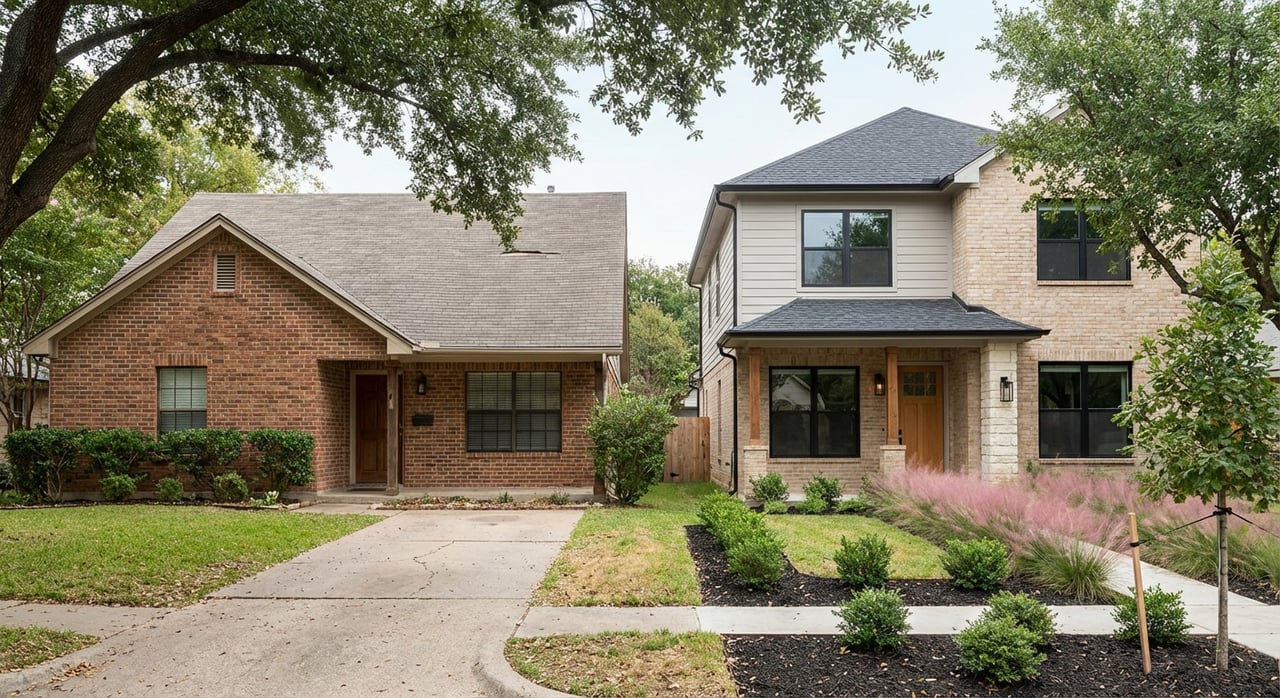
Trying to decide between a new build and an existing home in Frisco? You are not alone. Both paths can work well, but each has different costs, timelines, and protections that matter in our local market. In this guide, you will learn how prices compare, how builder contracts differ from resale, what to expect with warranties and HOAs, and the key steps to make a confident choice. Let’s dive in.
Frisco market snapshot in 2026
As of January 2026, the median sale price in Frisco was about $625,000, according to the latest Redfin market snapshot. Weekly trackers have shown higher median list prices and a split between higher-priced established luxury inventory and lower-priced new listings. Pricing varies by neighborhood and product tier.
Current new construction ranges depend on the community and floor plan. Entry-level townhomes and smaller single-family homes often start in the mid $500,000s to $700,000s. Many mid-size single-family homes sit in the $700,000 to $1 million band, while luxury or custom product in master-planned communities like Fields Frisco frequently exceeds $1 million to $2 million. Always confirm live pricing with current listings or builder reps.
New construction: what you get
Price structure and upgrades
Builders set a base price, then add lot premiums, structural options, and design selections. A quick move-in home’s sticker price is usually closer to the final number. If you build from the ground up, plan a realistic budget for design-center choices and landscaping. Your total can rise quickly with flooring, cabinets, counters, and technology packages.
Incentives and rate buydowns
In today’s market, many builders offer incentives like closing cost credits, design-center credits, and temporary or permanent rate buydowns through preferred lenders. Incentives change often and may require you to use a specific lender or title company. Compare the long-term value of a permanent rate reduction against a one-time design credit. A small rate drop can be worth more over the life of a 30-year loan than a larger one-time credit.
Energy efficiency and maintenance
New homes typically include efficient HVAC systems, tighter building envelopes, and LED lighting. ENERGY STAR and DOE materials show that properly verified energy-efficient homes can be 15 to 30 percent more efficient than older baselines, which can lower your monthly operating costs. You can review federal guidance on energy savings in this EPA overview.
Resale homes: value and tradeoffs
Price and negotiation flexibility
Resale homes may offer more room to negotiate price, repairs, or closing costs. You can also compare multiple homes in established neighborhoods at once. Because the home is already built, you can see the exact finishes and condition and avoid upgrade surprises.
Condition, updates, and character
Resale homes can offer mature landscaping, finished outdoor spaces, and unique architectural details. On the flip side, you may budget for updates like roofs, HVAC, windows, or cosmetic refreshes. A full home inspection helps you understand near-term and long-term maintenance needs before you commit.
Move-in timing and certainty
With resale, you can often close and move in within 30 to 45 days, subject to financing and inspections. New construction timelines vary with build stage and supply chains. If you need a specific move-in date, resale can offer more certainty.
Contracts and process differences
Builder contracts are not the same as the standard TREC resale contract. They are builder-drafted and tend to be more favorable to the builder. Review key differences carefully before you sign.
- Resale contracts: The Texas TREC 1–4 Family contract is standardized and consumer-facing. Option periods and broad inspection rights are common. Many offers include appraisal and financing protections. You can review a practical comparison here: Texas builder contracts vs TREC contracts.
- Builder contracts: Many do not include a general option period, use larger or nonrefundable deposits, limit inspection access to pre-drywall and final walkthroughs, and restrict remedies. Appraisal and financing contingencies may be limited, which can put your deposit at risk if the appraisal comes in short.
Important process tip: Bring an experienced buyer’s agent with you before you visit model homes or register with a builder. Buyer representation is often paid by the builder, and recent industry practice changes emphasize written buyer agreements. See this overview of the NAR settlement facts and buyer agreements for context.
Warranties and legal timelines in Texas
Many Texas builders use a “1–2–10” style warranty: one year on workmanship, two years on major systems, and ten years on structural coverage. Review who administers the warranty, what is covered and excluded, start dates, and how claims and disputes are handled. For a plain-language look at common builder warranties in Texas, see 2–10 Home Buyers Warranty’s Texas page.
Texas construction law has also seen recent changes to statutes of repose. In some cases, a residential contractor that provides a qualifying express written warranty may have a shorter repose period, which affects how long you can pursue certain defect claims. The exact window depends on the contract and statutory criteria. For a legal summary of these changes, review this article from Cooper & Scully, and consult your agent or attorney for contract-specific guidance.
HOA, taxes, and recurring costs
HOA fees and documents
Many newer and master-planned communities in Frisco have mandatory HOAs. Fees vary based on amenities and maintenance scope. It is common to see monthly dues in a range that roughly equates to about $1,800 to $2,500 per year, depending on what is included. In Texas, you have the right to receive key HOA disclosures and a resale certificate that shows assessments, reserves, and any pending litigation. Learn more about required HOA documents and timelines from the Texas State Law Library’s guide.
Property taxes and special districts
Frisco straddles Collin and Denton counties, and total tax bills combine city, county, school district, and possibly special districts like MUDs or PIDs. Newer developments sometimes include special taxing districts that add to the annual tax load until bonds are paid. To understand current city rate context and local policy, see this recent Community Impact coverage of Frisco’s tax rates. Always request a property-specific estimate that lists all taxing entities before you commit.
Commute, jobs, and schools
Frisco buyers often balance lot location and lifestyle against commute times. The U.S. Census reports a mean travel time to work of about 28.6 minutes in Frisco, which makes proximity to Dallas North Tollway and State Highway 121 important for many buyers. You can reference the Census QuickFacts for Frisco as you plan commute test drives.
Major anchors like The Star, the Dallas Cowboys campus, and PGA Frisco have shaped demand and the type of product built nearby. For schools, Frisco ISD is a significant consideration for many households. Check current attendance boundaries and individual campus profiles directly with the district or verified school profile sites to ensure the home matches your needs.
Side-by-side quick compare
New construction may be best if you want:
- Modern layouts, energy-efficient systems, and new warranties.
- A say in floor plan, finishes, and design choices.
- Lower near-term maintenance and repair costs.
- Potential builder incentives that offset closing costs or your rate.
- A future-focused location in a master-planned community.
Resale may be best if you want:
- A shorter move-in timeline and more certainty on closing dates.
- Mature landscaping, finished outdoor spaces, and established streetscapes.
- Room to negotiate on price, repairs, or concessions.
- A wider range of neighborhoods and architectural styles.
- A clear view of actual condition and operating costs today.
Your Frisco decision checklist
- Confirm today’s median sale and list prices for your target area using a current source like the Redfin Frisco market report.
- Ask builders for a written list of incentives, conditions, and an itemized design-center price sheet. Compare any credit to the long-term value of a permanent rate buydown.
- Compare contract forms line by line. Ask whether appraisal and financing contingencies apply, how big the deposit is, whether it is refundable, and what inspections are allowed. See this guide to Texas builder vs TREC contracts.
- Review the warranty administrator and coverage periods. Understand workmanship, systems, and structural coverage and how claims work. Start with 2–10’s Texas overview.
- Treat HOA documents as mandatory due diligence. Review CC&Rs, rules, budgets, reserves, and litigation history. Learn timelines and rights from the Texas HOA law primer.
- Estimate property taxes including any MUD or PID layers. Compare a new-build estimate to a similar resale home. For city-rate context, see Community Impact’s Frisco tax coverage.
- Plan inspections. For new builds, schedule independent pre-drywall and final inspections. For resale, order full inspections of roof, HVAC, electrical, plumbing, and foundation.
- Test your commute at peak hours and verify school boundaries directly with the district. Use Census data on average commute times as a reference point.
Make your move with a local pro
Whether you are eyeing a quick move-in in a master-planned community or a turnkey resale in an established neighborhood, you deserve clear guidance and strong representation. Our team helps you compare true out-the-door costs, navigate builder contracts, line up inspections, and protect your interests at every step. Ready to tour homes and run the numbers together? Connect with Bray Real Estate Group to get started.
FAQs
What are the average home prices in Frisco in 2026?
- As of January 2026, the median sale price was about $625,000 based on the Redfin Frisco market report.
How do builder incentives in Frisco work right now?
- Many builders offer changing packages like closing credits and rate buydowns, often tied to preferred lenders, so always verify terms in writing and compare long-term value.
What is different about Texas builder contracts vs resale?
- Builder contracts often reduce inspection windows, increase or limit deposit refunds, and narrow appraisal or financing protections compared with standard TREC resale forms.
What does a 1–2–10 builder warranty cover in Texas?
- Commonly one year workmanship, two years systems, and ten years structural, but coverage varies, so confirm the administrator, start date, exclusions, and claim process.
How do HOAs and special districts affect costs in new Frisco communities?
- HOAs add dues for amenities and maintenance, while special districts like MUDs or PIDs can add tax layers, so review HOA documents and request a full tax estimate.
What is the typical Frisco commute time?
- The Census reports a mean travel time to work of about 28.6 minutes, and access to Dallas North Tollway and SH 121 can be a key factor for many buyers.